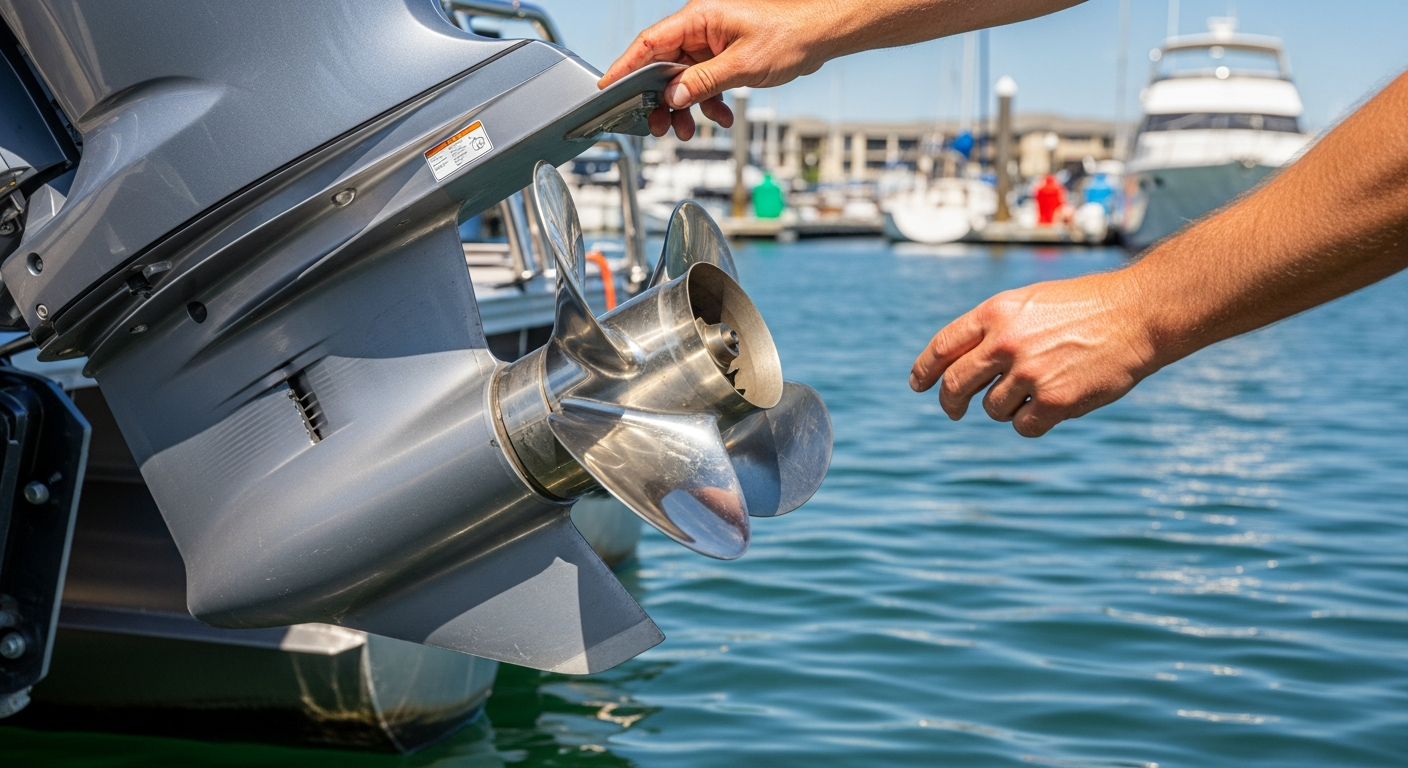
⚡ Universal Pontoon Propping Chart
Every year, thousands of pontoon buyers drive off the lot with a boat that can't plane with a full load — because the dealer sold them the cheapest engine package at the show. Owners call it the "boat show special" and it is the single most common regret in pontoon forums.
This calculator uses aggregated data from Reddit's r/pontoonboating, PontoonForums.com propping discussions, and Club Bennington to recommend the minimum HP, prop diameter, prop pitch, and target RPM range for your specific setup. As one pontoon design engineer confirmed on Reddit, getting the prop match right is one of the most impactful decisions an owner can make. No manufacturer bias. No dealer upsell. Just the math that experienced owners wish someone had shown them first.
⚡ Find Your Pontoon's Ideal Prop
Select your engine and boat setup. Recommendations are based on real owner data and engine-specific gear ratios — not generic formulas.
⚡ How to Use Your Results
The numbers above are starting points based on real-world owner experience — not manufacturer spec sheets. For additional context on how to evaluate pontoon specs holistically, see Boating Magazine's pontoon buyer's guide. Here is what each number means and what to do with it.
Recommended HP
This is the minimum horsepower that owners with similar boats report as adequate for your intended use. "Adequate" means the boat planes consistently with a typical passenger load and handles wind without struggling.
Going one bracket higher than the recommendation is the single most common piece of advice from experienced owners. A 22' pontoon that technically runs on 115 HP will feel dramatically different with 150 HP when you load up the family and the cooler on a windy Saturday.
Prop Diameter and Pitch
Diameter controls how much water the prop grabs. Pitch controls how far the boat moves per revolution — think of it like the gears on a bicycle. Lower pitch = more acceleration and pulling power. Higher pitch = more top speed.
If your prop is too small or the pitch is wrong, your engine either over-revs (exceeding max RPM and risking damage) or lugs below the power band (underpowered feel, poor fuel economy).
Target WOT RPM
Wide Open Throttle RPM is your diagnostic number. Take your boat out with a typical load, run to full throttle on flat water, and check the tachometer:
- Below the range: Your prop pitch is too high or the boat is overloaded. Consider dropping 1–2 inches of pitch.
- Within the range: Your setup is correct. The engine is operating in its designed power band.
- Above the range: Your prop pitch is too low. Consider adding 1–2 inches of pitch for better top speed and fuel economy.
🔍 The "Boat Show Special" Problem
The term comes from forum members who bought pontoons at boat shows where dealers pair minimum-rated engines with full-size boats to hit a lower price point. A 24-foot pontoon "rated" for 90 HP will technically move — until you put 6 passengers aboard and try to fight afternoon wind on a big lake.
The result: a boat that bogs down at half throttle, can't maintain plane in a turn, and leaves the owner blaming the brand when the real problem was the engine match. Read the full breakdown in our boat show special guide.
The fix is always more HP, not a different prop. No prop change compensates for an engine that simply cannot push your loaded weight. Use the calculator above with your actual passenger count — not the "just me and the wife" number the dealer used at the show.
📊 Pontoon vs. Tritoon: When Three Tubes Change Everything
Tritoons handle more horsepower and ride better in rough water than twin-tube pontoons. If your calculator results seem high and you are comparing new boats, a tritoon may be worth the upgrade — especially on larger lakes with afternoon chop.
The third tube provides approximately 25% more lift and stability, which means:
- Higher HP ceiling — tritoons are often rated for 250–400 HP where a similar-length pontoon maxes at 150–200
- Better handling in waves — less "bobbing like a cork" in crosswinds
- Faster planing — gets on plane quicker with a full load
🎯 HP Reference by Boat Length
For quick reference, here are the most common owner-reported HP ranges by length. These assume moderate recreational use with 4–6 passengers:
| Length | Pontoon (2-tube) | Tritoon (3-tube) |
|---|---|---|
| 18 ft | 60–90 HP | — |
| 20 ft | 75–115 HP | 115–150 HP |
| 22 ft | 90–150 HP | 150–200 HP |
| 24 ft | 115–175 HP | 150–250 HP |
| 25 ft | 150–200 HP | 200–300 HP |
| 27+ ft | 175–250 HP | 250–400 HP |
These ranges come from owner discussions, not manufacturer ratings. Manufacturer "recommended" HP ranges tend to start lower because they are rating the hull, not the typical use case.
Next Steps
Already own a pontoon and want to check your prop? Run the calculator with your current specs, then do a WOT RPM test on your next outing. If your RPM is outside the target range, you may need a prop pitch adjustment.
Looking at specific HP guides? See our detailed breakdowns for 90 HP, 115 HP, 150 HP, and 200 HP setups.