🔍 Pontoon Tearaway Pad Inspection: The 5-Minute Check That Saves Thousands
Tearaway pads are the #1 hidden defect that sellers cover up on used pontoons — and most buyers have never heard of them. A cracked tearaway pad is a direct leak path into the pontoon log, leading to the kind of internal water damage that costs $3,000–$10,000+ to repair. The check takes 5 minutes with a flashlight and your hands.
This guide shows you exactly what tearaway pads are, where to find them on any pontoon, what a cracked one looks like versus a healthy one, and what to do when you find damage. Every detail comes from marine surveyors and experienced owners on PontoonForums.
⚓ What Is a Tearaway Pad?
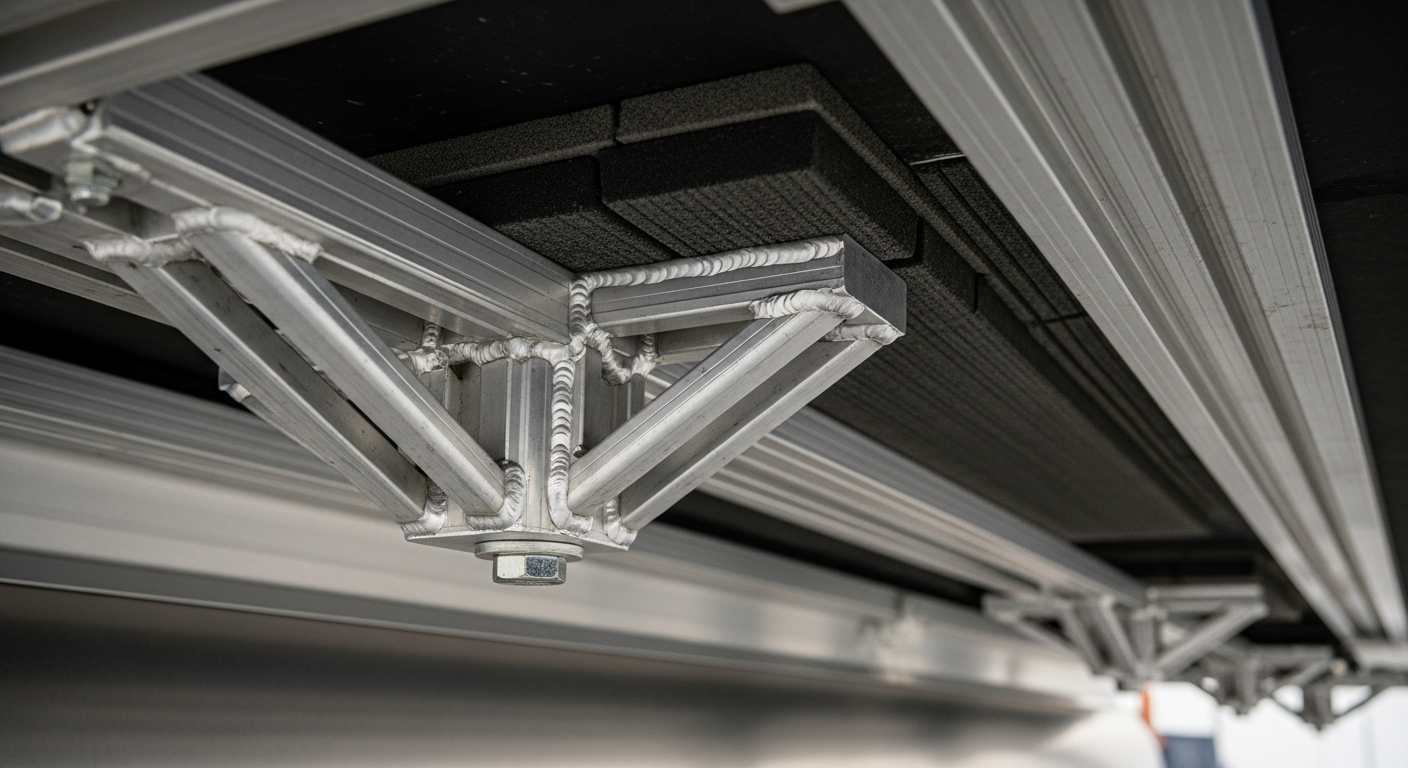
A tearaway pad is a small rectangular or square piece of aluminum welded to the outside surface of a pontoon log. Instead of welding brackets, cross-members, and mounting hardware directly to the log tube, manufacturers weld these pads to the tube first, then bolt components to the pads.
The logic is sound in theory: if the boat hits something and the bracket needs to tear away on impact, the pad detaches from the tube rather than ripping a hole in the log wall itself. Hence the name — "tearaway" pad.
The problem: Over years of vibration, thermal cycling, and stress loading, the weld between the pad and the log tube develops hairline cracks. These cracks are invisible to casual inspection — they hide under the pad edge, behind paint, and beneath grime. But they create a direct path for water into the sealed interior of the log.
🔧 Where to Find Tearaway Pads on Your Pontoon
Every pontoon has tearaway pads. The number varies by manufacturer and model, but a typical 22–24 foot pontoon has 12–20 pads per log. They attach:
📍 Cross-member mounts
The aluminum bars that connect the logs to the deck frame bolt to pads on the top of each log. A 24-foot pontoon typically has 6–8 cross-members, each with 2 mounting pads per log. These are the highest-stress pads because they carry the entire weight of the deck, furniture, and passengers.
📍 Lifting strake brackets
Performance strakes and lifting fins mount to pads welded along the bottom of each log. These pads take impact stress from waves and vibration at speed.
📍 Fence post bases
The aluminum fence posts that hold the railing bolt to pads on the outer top edge of each log. Lower stress than cross-members but still a potential leak point.
📍 Motor mount brackets
The transom motor mount connects to the stern of the logs via heavy-duty pads. These handle engine thrust, torque, and vibration — high stress and high consequence if they fail.
⚡ The 5-Minute Inspection
You need: a flashlight, your fingers, and the ability to crawl under a boat on a trailer. That is it.
Get under the boat
The boat must be on a trailer with enough clearance to crawl underneath. You cannot inspect tearaway pads with the boat in the water. If a seller refuses to let you see the boat on a trailer — that is a red flag by itself. As one pontoon design engineer explained on Reddit, proper trailer fit and underside access are critical to catching structural problems early.
Start at the bow, work toward the stern
Shine the flashlight along the top surface of each log where it meets the deck frame. You are looking for the rectangular pads — they are typically 2"×3" to 4"×6" aluminum plates with visible weld beads around their perimeter.
Run your finger along every pad edge
This is the critical step. Press your fingertip along the weld bead where the pad meets the log tube. You are feeling for:
- Separation: Any gap between the pad edge and the tube surface — even a hair-width gap — means the weld has cracked
- Movement: Press down on the pad with your thumb. A healthy pad feels solid and immovable. A cracked pad flexes or shifts slightly
- Granular texture: Weld beads should feel smooth and continuous. A gritty or porous feel indicates weld porosity — tiny holes that will become cracks
Look for the telltale signs
Visual indicators of tearaway pad failure:
- White salt-like residue along a pad edge — aluminum oxide from an active corrosion crack
- Discoloration or staining trailing down the log from a pad — water has been weeping through
- Fresh paint on individual pads — sellers paint over cracked pads to hide the evidence. If you see fresh paint on pads but the rest of the hull is original, that pad has been repaired or concealed
- Sealant around pad edges — marine sealant (white or clear goop) around a pad means someone already found a crack and tried to seal it rather than weld-repair it
Check both sides of every log
Do not just check the easy-to-reach top pads. Roll or scoot under the boat to inspect pads on the bottom and sides of each log. Lifting strake pads on the underside are exposed to the most water contact and often fail first on boats that sit in the water full-time.
📊 What You Found: Decision Guide
✅ All pads solid, no cracks, no movement
The logs are in good condition at the pad joints. Proceed with other inspection items from the full 27-point checklist. This does not guarantee the logs are water-free — you should still do the swooshing sound test to check for leaks from other sources (drain plugs, weld seams).
⚠️ 1–2 pads show hairline cracks or minor separation
Repairable. A certified aluminum TIG welder can grind out the cracked weld and re-weld the pad for $50–$150 per pad. This is a negotiation point, not a walk-away. Use the repair cost to reduce the purchase price. Get the repair done before the boat goes in the water.
After repair, do a pressure test on that log to confirm the repair sealed completely.
🚨 Multiple pads cracked, sealant repairs, or fresh paint cover-ups
Major concern. Multiple cracked pads suggest systemic weld quality issues — not isolated failures. Sealant repairs indicate the seller knows about the problem and chose the cheapest fix. Fresh paint on pads is attempted concealment.
At minimum, demand a professional marine survey before proceeding. More likely, this is a walk-away situation — especially if combined with the swooshing sound (water already inside the logs). A boat with systemic pad failures and water in the logs is a weekend-killer waiting to happen.
🚨 Any pad with visible movement or a pad that has detached
Walk away. A pad that moves under thumb pressure has completely separated from the tube. A detached pad means the component it was mounting (cross-member, strake, fence post) is hanging on bolts alone with no structural connection to the log. This is both a leak hazard and a structural failure risk.
🔧 Why Sellers Hide Tearaway Pad Damage
Tearaway pad cracks are invisible from standing height. You cannot see them from the dock, from the captain's chair, or during a sea trial. A seller who knows about cracked pads also knows that 99% of buyers will never crawl under the boat to check. The ones who do are the buyers sellers worry about — because those buyers know what they are looking at.
Common concealment tactics:
- Fresh bottom paint on the logs only (the rest of the hull is original finish)
- Marine sealant globbed around pad edges — looks intentional but is almost always a band-aid
- "We just had the hull detailed" — legitimate detailing does not involve painting over individual weld joints
- Refusing to show the boat on a trailer — "it's in a slip, we can do a sea trial" prevents any underside inspection
⚡ Which Brands Have the Most Tearaway Pad Issues?
Tearaway pad design is universal — every manufacturer uses them. But forum data shows higher complaint frequency on:
- Entry-level brands (Sun Tracker, lower Lowe models) — lighter gauge aluminum pads and thinner weld beads crack sooner
- Pre-2010 boats from any brand — manufacturing standards have improved significantly; newer boats generally have better weld quality
- Boats stored in the water year-round — constant water contact accelerates corrosion at every weld joint, including pads
Premium brands (Bennington, Barletta, Harris) use heavier gauge pads with more robust welds, but they are not immune — any pontoon over 10 years old with significant use should be inspected regardless of brand.
Next Steps
The tearaway pad check is one item in a thorough used pontoon inspection. For the complete walkthrough — including logs, deck, engine, electrical, and paperwork — see the full 27-point inspection guide.
If you found water in the logs during the swooshing sound test, see our complete diagnosis and repair guide for drain procedures, pressure testing, and repair cost estimates.
If the boat is sitting low in the back, cracked tearaway pads allowing water into the stern log sections may be the cause.