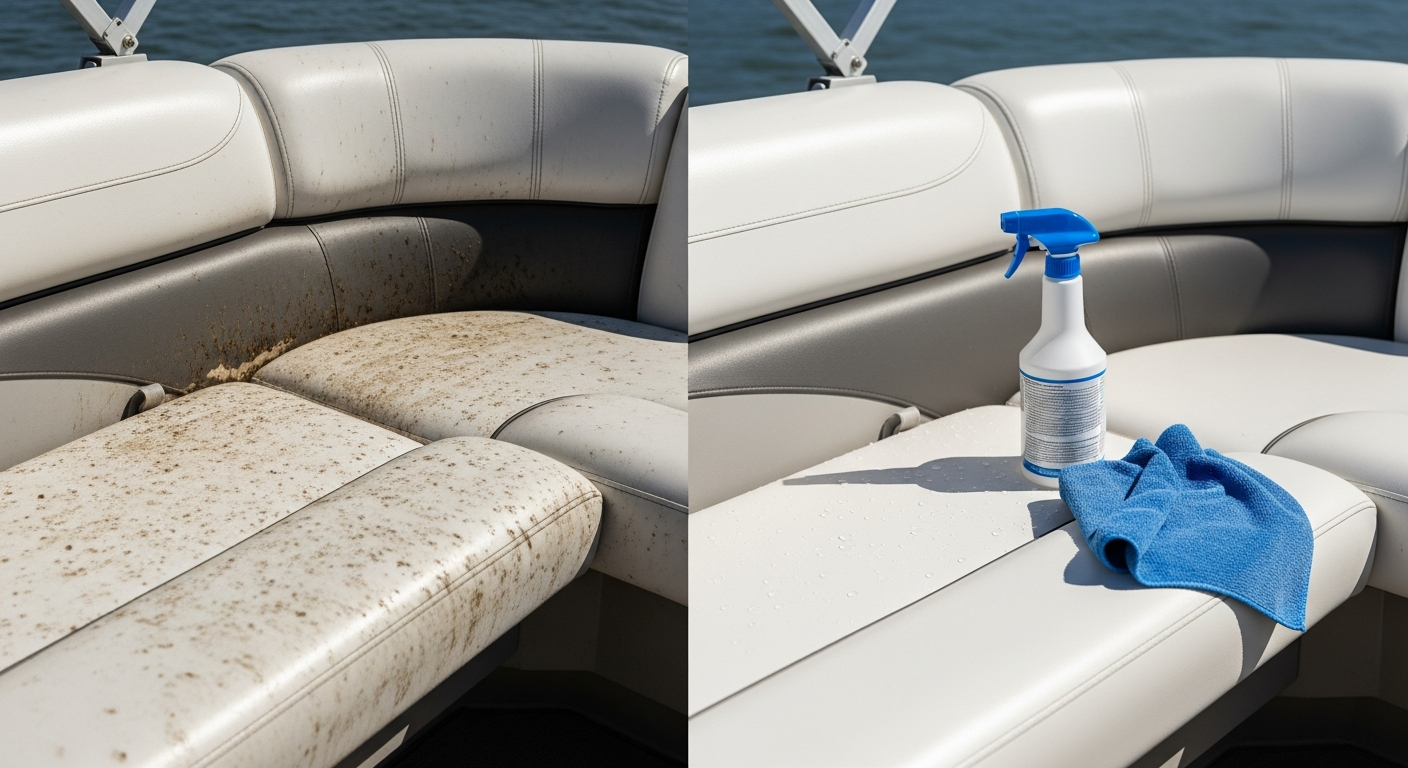
🔧 Simtex Seat Stain Removal: The Cleaning Method That Won't Destroy Your Vinyl
Simtex is the vinyl alternative that shows up on entry-level and mid-range pontoon seats — and it stains faster, deeper, and more stubbornly than marine-grade vinyl. Forum members report mildew spots within the first season, sunscreen transfer stains that will not budge, and a general yellowing that makes 3-year-old seats look 10 years old.
The wrong cleaner makes it worse. Bleach destroys the surface coating. Acetone melts the material. Magic Erasers scour off the UV protection layer. This guide covers the exact cleaning methods that PontoonForums and Reddit cleaning discussion threads have verified actually work — without turning a $500 stain problem into a $10,000 reupholstery job.
🔍 Simtex vs. Marine-Grade Vinyl: Why It Stains Differently
Simtex is a woven textile backing with a vinyl-like surface coating — not solid vinyl through-and-through. Marine-grade vinyl (like those from Nautolex, Spradling, or Morbern) is a solid vinyl sheet that resists moisture penetration. Simtex is especially common on Bennington models, where the Bennington owner community has documented the material's quirks extensively. Simtex's woven backing absorbs moisture through seams, needle holes, and micro-cracks in the surface coating.
This structural difference creates three problems that solid vinyl does not have:
- Mildew grows inside the material. Moisture absorbed into the woven backing creates a mildew habitat that surface cleaning cannot reach. The black spots you see are mildew colonies that have grown through to the surface — the roots are deeper.
- Stains absorb, not just sit on the surface. Sunscreen, tanning oil, food, and drink spills wick into the textile backing. On solid vinyl, these sit on the surface and wipe off. On Simtex, they penetrate.
- UV damage is accelerated. The surface coating on Simtex is thinner than solid vinyl. Once UV breaks down this coating (typically 2–4 years), the exposed textile backing deteriorates rapidly — becoming stiff, cracking, and eventually tearing.
⚠️ What Will Destroy Your Seats (Do NOT Use)
Strips the UV coating, yellows white Simtex, and weakens the textile backing. The stain may disappear temporarily but the material deteriorates permanently.
Dissolves the vinyl surface coating on contact. Leaves a dull, rough patch that collects dirt faster than the surrounding material.
Works by micro-abrasion — it literally sands the surface. On Simtex, this removes the UV coating and scuffs the surface texture. The cleaned area will look different from the rest of the seat and will stain faster going forward.
Drives water into the textile backing and can separate the vinyl coating from the backing entirely. Also forces water into foam cushions, creating internal mildew.
Formulated for dashboard vinyl, which is a different material. Many contain silicone that makes Simtex slippery and attracts dirt. Some contain solvents that react with the Simtex coating.
✅ The Cleaning Method That Works
This method comes from a PontoonForums thread with 200+ replies where owners tested and reported results on Simtex specifically.
For general dirt and light stains
- Rinse seats with fresh water to remove loose debris. Use a garden hose, not a pressure washer.
- Mix a cleaning solution: 1/4 cup white vinegar + 1 tablespoon baking soda + 1 quart warm water in a spray bottle. Shake gently until the fizzing stops.
- Spray the solution onto the stained area. Let it sit for 3–5 minutes. Do not let it dry on the surface.
- Scrub with a soft-bristle brush (a dish brush or detailing brush — not a stiff deck brush). Work in small circles.
- Wipe with a clean microfiber cloth. Rinse the cloth frequently.
- Rinse with fresh water and dry with a clean towel. Do not let seats air-dry in the sun while wet — water spots will form.
For mildew (black spots)
- Spray affected areas with a marine-specific mildew remover. Star Brite Mildew Stain Remover and 303 Marine Mildew Remover are the two products forum members report the best results with on Simtex. See recommended cleaners →
- Let the product sit for 10–15 minutes. The active ingredients need dwell time to penetrate the surface coating and reach the mildew roots in the textile backing.
- Scrub with a soft brush. The mildew spots should lift. If they do not lift after two applications, the mildew has penetrated deeper than surface treatment can reach.
- Rinse thoroughly. Residual mildew remover left on the surface will attract dirt.
- Apply a UV protectant after cleaning — 303 Aerospace Protectant is the most-recommended product for Simtex. It restores the UV barrier that cleaning removes. Apply every 4–6 weeks during boating season.
For sunscreen and tanning oil stains
Sunscreen transfer is the #1 stain complaint on light-colored Simtex. The oily base in sunscreen bonds with the vinyl coating and the woven backing simultaneously, making it extremely difficult to remove once set.
- Treat immediately if possible. Fresh sunscreen wipes off with a damp cloth. Once it bakes in the sun for an hour, it becomes a permanent stain on Simtex.
- For set stains: Apply a small amount of rubbing alcohol (isopropyl, 70%) to a white microfiber cloth. Dab — do not rub — the stain. The alcohol dissolves the oil base without damaging the vinyl coating at this concentration.
- Follow immediately with the vinegar/baking soda solution to neutralize the alcohol and clean the residue.
- Apply 303 Protectant to the cleaned area. The alcohol removes some UV coating — the protectant restores it.
Prevention: Ask passengers to apply sunscreen 30 minutes before boarding and let it absorb into skin. Mineral sunscreens (zinc oxide) stain less than chemical sunscreens (avobenzone). Lay towels on light-colored seats during peak sun hours.
📊 Stain Treatment Quick Reference
| Stain Type | Treatment | Success Rate | Notes |
|---|---|---|---|
| General dirt | Vinegar + baking soda solution | 95% | Works on first application |
| Surface mildew | Marine mildew remover + brush | 85% | May need 2 applications |
| Deep mildew | Marine mildew remover + repeated treatment | 50% | If roots are in backing, may not fully clear |
| Fresh sunscreen | Damp cloth wipe | 99% | Must treat within 30 minutes |
| Set sunscreen | Isopropyl alcohol dab + vinegar wash | 60% | Partial improvement; ghosting may remain |
| Fish blood / bait | Cold water rinse + enzyme cleaner | 90% | Never use hot water — sets protein stains |
| Rust stains | Oxalic acid-based cleaner (Bar Keepers Friend) | 75% | Test in hidden area first; rinse immediately |
| Yellowing | No effective treatment | 10% | UV damage to coating — irreversible on Simtex |
🛡️ Prevention: Cheaper Than Cleaning
- Apply 303 Aerospace Protectant every 4–6 weeks during boating season. This is the single most effective preventive measure. It creates a UV barrier and makes the surface more resistant to stain absorption. One bottle lasts a full season. Recommended protectants →
- Cover the boat between uses. UV is the primary enemy of Simtex. A properly fitted cover extends seat life by 2–3 years.
- Wipe down seats after every outing. A 5-minute wipe with a damp microfiber cloth removes sunscreen residue, food oils, and bird droppings before they set. This alone prevents 80% of staining.
- Keep seats dry when not in use. Fold seat backs up so moisture runs off. Do not leave wet towels, life jackets, or gear on seats overnight — trapped moisture is the #1 mildew trigger.
- Replace seat snaps immediately when they fail. Broken snaps create gaps in seat covers where rain enters and pools in the foam. Once foam is wet, mildew grows from the inside out — and no amount of surface cleaning fixes it.
💡 When to Stop Cleaning and Start Replacing
Simtex has a finite lifespan. Forum consensus puts it at 4–7 years depending on UV exposure, storage habits, and maintenance. When the material reaches end-of-life, no cleaning method will restore it. Signs it is time to reupholster:
- Surface cracking — the vinyl coating has failed and the textile backing is exposed
- Persistent stiffness — the material feels rigid even when warm, indicating UV embrittlement
- Mildew returns within days of cleaning — the colonies are established in the backing and will regrow indefinitely
- Foam is saturated — squeeze the cushion and water or a musty smell emerges from inside
Full pontoon reupholstery costs $5,000–$10,000+ depending on seat count, material choice, and labor rates. When replacing, upgrade to marine-grade vinyl (Nautolex or equivalent) — the per-year cost is lower than replacing Simtex every 5 years.
For a full comparison of marine cleaning products that work on both Simtex and marine vinyl, see our pontoon cleaner comparison. For the complete annual maintenance routine, see the seasonal maintenance checklist.